
.png)


News
Veterinary clinics, animal hospitals, shelters, and pet care facilities deal with spills every day. Unlike many other workplaces, these spills often involve organic fluids from animals, including urine, vomit, feces, blood, saliva, and mucus.
Because these fluids may contain germs, odors, and contamination risks, veterinary teams need a cleanup process that is fast,practical, and safe.
How veterinary facilities usually handle cleaning
Veterinary cleaning is based on infection control,biosecurity, and protecting staff, clients, and animals.
The CDC’s veterinary workplace guidance highlights the practices, safeimportance of veterinary standard precautions, infection control practices, safe animal handling, PPE, and proper care when working around animals.
Veterinary facilities commonly focus on:
- wearing gloves or PPE when needed
- removing visible organic material
- cleaning the affected surface
- disinfecting with the right product
- allowing proper contact time for disinfectants
- separating contaminated materials
- preventing spread between rooms, cages, and treatment areas
AAHA infection control guidance also emphasizesenvironmental cleaning and disinfection as part of infection control and biosecurity in veterinary practices.
Why spills are different in veterinary settings
Animal-related spills can happen quickly and often. A dog may urinate in the lobby. A cat may vomit in an exam room. A recovering animalmay have diarrhea in a kennel. A procedure area may need blood or fluid cleanup.
Common veterinary spill situations include:
- urine in waiting rooms
- vomit in exam rooms
- feces or diarrhea in kennels
- saliva or mucus during treatment
- blood or body fluids in procedure areas
- pet accidents in hallways or transport spaces
These spills can spread odor quickly and may be difficult to clean with towels alone.
How solidifier can help in the process
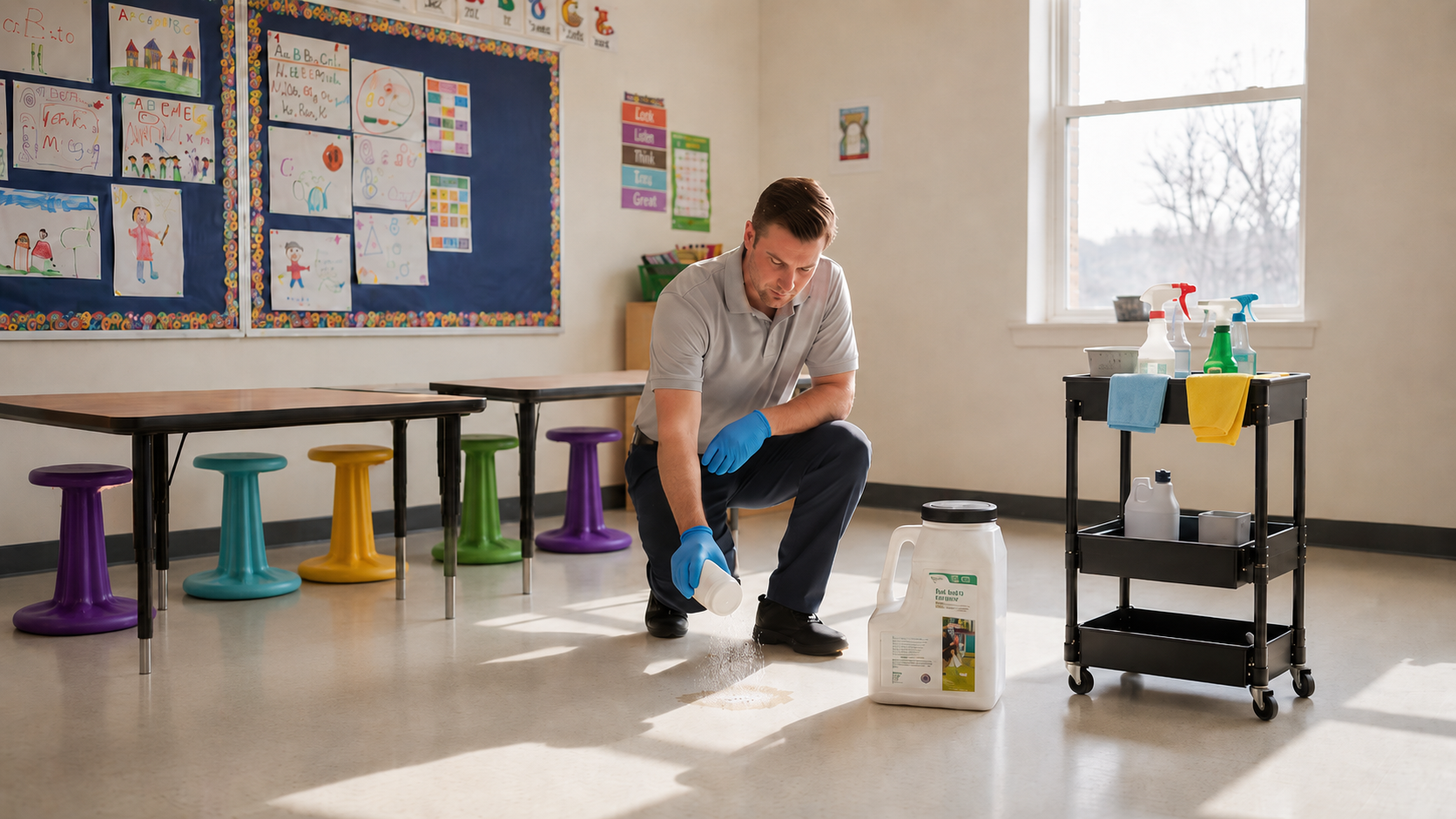
Kore Body Fluid Solidifier can help veterinary teams manageorganic fluid spills before the final cleaning and disinfection step.
It helps by:
- quickly absorbing animal-related liquid spills
- encapsulating fluids into a more manageable solid
- helping reduce odor during cleanup
- reducing liquid spread
- making the material easier to remove
- helping staff avoid wiping liquid across a larger area
This can be especially useful when a spill needs to becontrolled quickly in front-of-house areas like waiting rooms, exam rooms, orhallways.
Best veterinary use cases
Kore Body Fluid Solidifier may be helpful in:
- veterinary clinics
- animal hospitals
- pet boarding facilities
- grooming facilities
- shelters
- kennels
- exam rooms
- treatment rooms
- waiting areas
- recovery areas
- transport vehicles
It can be especially useful for urine, vomit, feces, mucus,saliva, and other organic fluid spills.
Why removing organic material matters
In veterinary cleaning, visible organic material should beremoved before proper disinfection. Organic matter can interfere with cleaning and disinfecting if it remains on the surface.
Shelter medicine sanitation guidance describes cleaning anddisinfection as a process that includes tidying, washing, disinfecting, and drying, with disinfectant selection based on the organisms of concern and safety for the animal species.
A solidifier can support the early part of that process by helping staff remove the liquid portion of the mess more easily before the surface is washed and disinfected.
Does it replace veterinary disinfectants?
No. Kore Body Fluid Solidifier helps with absorption,containment, odor control, and easier removal of organic fluids. It should not replace veterinary disinfectants or clinic sanitation protocols.
After using the solidifier, veterinary staff should still:
- remove the solidified material
- dispose of waste according to clinic policy
- clean the surface
- disinfect with an appropriate veterinary disinfectant
- follow PPE and infection control procedures
- follow local rules for regulated waste when applicable
This is especially important in treatment rooms, isolation areas, surgical areas, or anywhere infectious disease is suspected.
Best Used for Organic Fluid Spills
Kore Body Fluid Solidifier is designed for organic fluids and body fluid cleanup. It works best for everyday spill situations involvingurine, vomit, blood, mucus, feces, saliva, and similar organic messes.
For non-organic or specialized spill situations, users should follow their facility’s approved cleanup procedure and use theappropriate absorbent for that material.
This helps keep cleanup safer, more organized, and alignedwith the needs of schools, veterinary clinics, healthcare facilities, retirement homes, and custodial teams.
Final answer
Veterinary facilities handle spills by removing visible organic material, cleaning the affected surface, and disinfecting according to infection control procedures. Kore Body Fluid Solidifier can help with the first stage of cleanup by quickly absorbing and solidifying animal-related fluids such as urine, vomit, feces, blood, saliva, and mucus.
It helps make the cleanup process faster, cleaner, and easier to manage, especially in exam rooms, kennels, waiting areas, and treatment spaces. It should be used as part of the cleanup process, followed by proper cleaning and disinfection according to veterinary facilityprotocols.




.png)


