News
Wobble Chair Safety at School: Age, Fit, and Student Readiness
A student’s interest is a useful starting point, but a teacher needs to consider more than enthusiasm or a birthday. Does the seat fit the learner, and can the student use its movement appropriately during a lesson?
Kore Design offers fixed-height and adjustable kids’ wobble chairs, giving schools options for different learners. The classroom opportunity is to pair that choice with clear teaching: small movements while seated, a suitable place to work, and expectations students understand.
What Does Safe Use Mean in a Lesson?
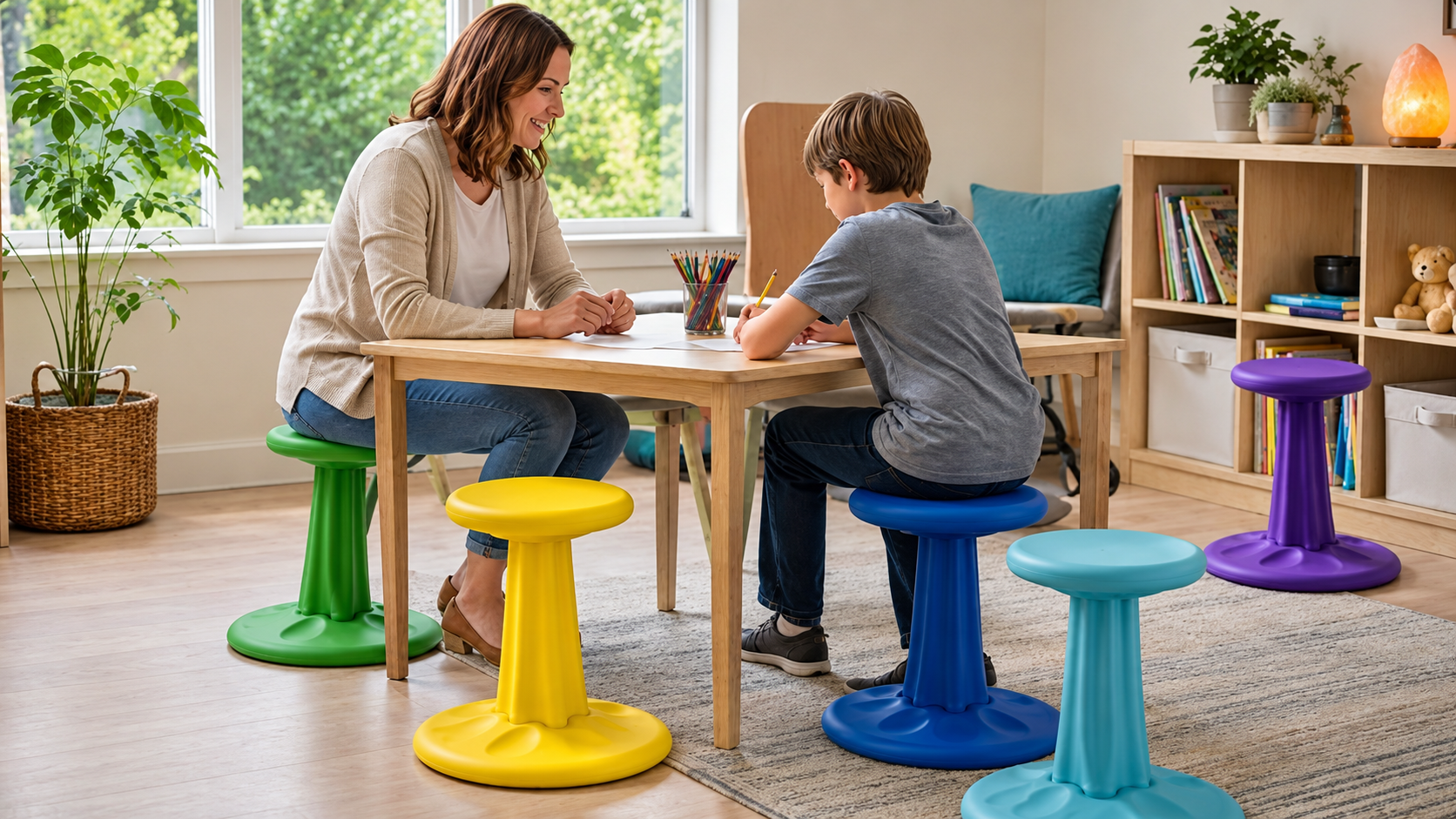
A wobble chair is an active-seating stool with a rounded base that permits gentle rocking and shifting while the user remains seated. At school, the important distinction is between using that movement during an activity and treating the chair as play equipment.
For classroom use, begin with three connected questions:
Does the chair fit? Consider the student’s body size and the desk or table where the chair will be used.
Can the student stay seated with control? Look for small movements in one place rather than standing, jumping, or aggressive spinning.
Have the expectations been taught? Explain intended use before the student begins; do not asume the purpose is obvious because the stool looks inviting.
These are starting considerations, not a guarantee that any moving seat is suitable for every child. Follow the selected model’s instructions and keep another seating option available.
Why Fit Matters Before the First Lesson
The chair and the work surface need to work together. A stool that is too tall may leave a child feeling unstable or unable to work comfortably at the desk. A stool that is too short may also create an awkward relationship with the table.
Use the intended learning position to judge fit, rather than the chair’s appearance on its own. The student should be able to sit comfortably, work at the surface, and maintain controlled movement. Children sharing a grade or classroom do not automatically need the same height.
Additional manufacturer safety note: Kore Design’s warning for fixed-height stools says seated users must be able to rest the bottoms of their feet on the floor. It also excludes use when balance difficulties or a disability make a moving seat unsafe. Check the selected model’s safety warning before use.
Is There One Best Age for a Wobble Chair?
No single age establishes readiness for every student. Consider size, maturity, and the learning environment rather than using a universal birthday or grade threshold.
Kore Design’s preschool, kids, junior, pre-teen, and adjustable options provide different starting points for selection. Younger learners may need a shorter chair; older students may need a taller or adjustable option. Model names help organize a range, but they do not replace checking the actual student and workspace.
When Might a Wobble Chair Be a Good Fit?
Consider this option for students who enjoy small movements while learning, find still seating difficult, or regularly work at a desk or table. A student who rocks a traditional chair may also prompt this conversation. Treat those behaviors as reasons to consider fit and intended use—not proof that a wobble chair is automatically suitable.
Some students prefer a conventional chair, cushion, or another seating arrangement. Giving them a choice is different from requiring every child to use active seating.
Teach Intended Use Before Students Try the Chair
Introduce the stool as a learning tool: “This seat lets you make small movements while you work. It is not something to stand on or play on.” Use these six student-friendly reminders to explain the intended behavior.
A Short Readiness Lesson for the Classroom
The following is a suggested teaching approach, not a formal readiness assessment or safety certification. Its purpose is to make expectations visible before a student begins using the chair for learning.
Explain the difference between movement and play
Use a suitably sized demonstration seat to show small, seated movements. Ask students to describe what they notice. Explain unsafe actions verbally rather than inviting children to demonstrate standing, jumping, or aggressive rocking.
Invite the student to show the routine
With the teacher observing, let the student try the appropriately sized chair at the intended work surface. Ask the student to explain how they will keep movement gentle and remain in place. This is an introduction to intended use, not a contest to wobble the most.
Agree on what happens next
Finish by asking, “What can you do if this seat is not helping you work?” Make requesting another chair part of the routine. The teacher can restate an expectation or choose a different seat rather than asking the student to continue with distracting or uncontrolled movement.
Keep the Message Consistent Across Adults
A suggested school-home approach is to use the same short reminders with classroom staff, support adults, and families. Describe the expectation in observable terms: sitting, small movements, and staying at the learning space.
For example, “We are practicing gentle seated movement, and another chair is available” is clearer than saying a student is simply “old enough.” The conversation stays about this learner’s use of the seating rather than an age-based label.
Why Kore Design’s Kids Options Matter for Schools
The relevant benefit is choice without assuming one size fits all. Kore Design’s fixed-height and adjustable kids’ options let educators consider different learners and work surfaces while retaining an active-sitting approach. These seats can be considered for classrooms, small-group tables, reading areas, and other learning spaces.
For a school, the next step is to connect the intended student group with the appropriate model—not simply order the same chair for everyone. Review Kore Design Kids Wobble Chairs and Kids Adjustable Wobble Chairs alongside the relevant sizing and use instructions.
Final Thoughts
Readiness for a wobble chair is not decided by age alone. It comes from matching the chair to the student and workspace, teaching intended use, and observing whether movement remains controlled during learning.
Kore Design gives schools several children’s seating options to consider. A clear introduction helps teachers turn that product choice into an understood classroom routine, while preserving another option for students who prefer or need different seating.
Find the Right Kore Design Seating for Your Students
Start with yourstudents’ fit and intended use. Explore Kore Design’s buying options or contact KoreDesign to discuss suitable models and purchasing arrangements foryour school. Bring your classroom requirements to that conversation so productselection supports the way students will use the seating.
Frequently Asked Questions
Does a particular birthday mean a student is ready?
No single starting age suits every learner. Consider actual fit, the ability to remain seated with control, and understanding of intended use.
Can classmates of the same age need different chairs?
Yes. Body size and therelationship with the work surface can differ. A shared grade does notestablish that one height will suit every student.
What should a student understand before first use?
The stool is for seated learning, not standing, jumping, or play. The student should understand gentle movement, remaining in place, and when to request another seat.
What should happen if wobbling interrupts the lesson?
Switch to another seat when the wobble chair becomes distracting. A different option does not mean the student has failed.
Does rocking a conventional chair establish suitability?
Not by itself. That behavior may prompt a seating discussion; fit, control, and adult expectations still need attention.
How can families reinforce the school’s expectations?
As a suggested school-home approach, share the same short reminders about seated use, gentle movement, and requesting another chair. Avoid presenting age alone as approval.
Explore the Kore Design Wobble Chair