News
Wobble Chairs and ADHD: Supporting Classroom Participation
A student may shift position, tap a foot, or find it difficult to remain still while working. For the teacher, the question is not simply how to stop movement. It is how to make room for that movement while the student participates in the lesson.
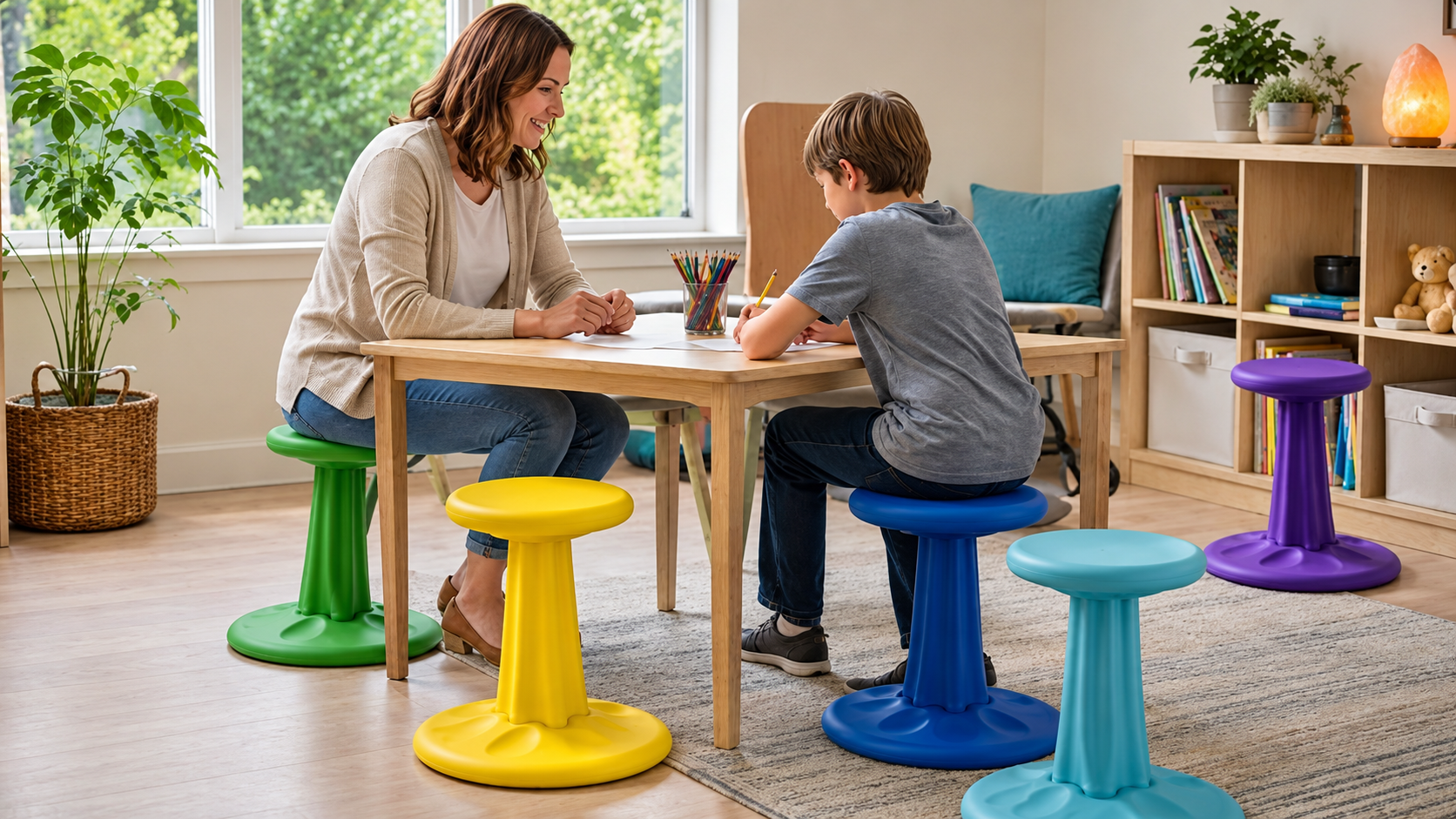
For some students with ADHD, a wobble chair may be a useful classroom seating option. Its rounded base allows small movements while the student remains at a desk or table. Kore Design gives schools active-seating options to consider alongside the chairs and support arrangements they already use.
The purpose is educational participation, not treatment. A wobble chair does not cure ADHD or replace professional support, classroom accommodations, or an individualized education plan.
Why Movement Matters for Some Learners
The classroom challenge is to accommodate movement without losing the purpose of the lesson. Movement is not always misbehavior. Some students prefer a less static seat, while others work comfortably in a conventional chair. The teaching goal is to find an arrangement that fits the learner and activity—not to require every student to sit or move in the same way.
Five Ways Active Seating Can Fit a Lesson
These suggested teaching applications build on five practical benefits of movement-friendly seating. They describe opportunities to consider, not results that every student will experience.
1. Allow movement without leaving the seat
A wobble chair lets a student gently shift while remaining near the book, worksheet, or discussion. During a teacher explanation, for example, small seated movements can be accommodated without automatically treating them as a reason to stop the lesson. Observe whether the student continues participating.
2. Offer a structured outlet for fidgeting
Rather than asking only for stillness, explain what movement is appropriate during the activity. A simple prompt is, “Small movements are okay while we work together.” Watch whether the movement fits the lesson or becomes a distraction; the presence of fidgeting alone does not answer that question.
3. Make seated work less static
Active sitting allows small changes in position. Invite the student to describe the experience: “Does this seat help you take part, feel the same, or make the task harder?” Listening to that feedback gives the student a role in choosing an arrangement for the activity.
4. Work within an existing classroom routine
Introduce the seating during an already familiar activity, such as independent work or small-group instruction. Keep the task and directions clear. The teacher can explore a different seating option without creating an entirely new lesson format or redesigning the room.
5. Keep movement within a defined learning space
A student can move while staying within the desk or table area used for a shared activity. This may suit writing, reading, or classroom discussion. Staying in place is not the same as learning, however; also notice responses, work on the task, and participation with others.
What Should Teachers Understand About the Research?
Research on dynamic seating has explored attention, in-seat behavior, and classroom engagement. These are different outcomes. Findings from a particular seat type or setting do not establish that every student with ADHD will benefit from a Kore Design wobble chair.
Treat the seat as one classroom support option, not an ADHD intervention with guaranteed results. Continue needed professional and educational support. Teacher observations can guide a seating decision, but they are not a medical assessment or evidence that the chair improves grades.
Why Consider Kore Design for This Classroom Role?
Kore Design’s plastic kids’ wobble chairs combine active-sitting design with student-size options, lightweight construction, straight forward assembly, and wipe-clean surfaces. For educators, those are practical features for introducing movement-friendly seating into everyday lessons. Explore Kore Design Kids Wobble Chairs for the available options.
Some Kore Design product listings describe antimicrobial material features. Confirm the exact model rather than assuming every seat includes them. Such a specification is separate from any claim about attention, learning, or ADHD.
Introduce the Seat as a Learning Tool
Explain its purpose before use: gentle seated movement during an appropriate activity, rather than large rocking or play. Follow the selected model’s fit and foot-position instructions, keep movement within the learning space, and offer another seat when wobbling becomes distracting.
Keep the message connected to the activity: “Can you use this seat while following the directions?” The expectation stays connected to learning, without making absolute stillness the measure of success.
Observe Participation, Not Just Time in the Seat
Notice engagement, disruptive movement, remaining in the learning area, distraction, and appropriate use. The prompts below are suggested ways to make those observations more specific; they are not a diagnostic checklist.
Should Every Student with ADHD Use a Wobble Chair?
No. ADHD does not create one seating preference for every learner. Some students may prefer a conventional chair, a standing option, afoot band, or a floor cushion. Consider the student’s response rather than treating the diagnosis as a furniture prescription.
Needs can also change across activities. A student may choose a wobble chair for writing and a different arrangement for reading. Keep seating options, quiet areas, and movement breaks within the broader classroom plan rather than expecting one stool to meet every need.
Final Thoughts
The useful question is not whether wobble chairs are good for every student with ADHD. It is whether this seating option helps a particular learner participate while accommodating movement within the lesson.
Kore Design gives schools an active-seating option to explore. Combine that product choice with clear expectations, student feedback, and specific observations. The aim is a workable learning arrangement—not a promise to treat ADHD or improve academic results.
Explore Kore Design Seating for Individual Learning Needs
Bring the student’s intended activity and seating requirements to the purchasing conversation. Review Kore Design Kids Wobble Chairs, explore Kore Design’s school buying options, or contact Kore Design to discuss suitable models. Choose a classroom tool that fits the learner, not a one-size-fits-all ADHD solution.
Frequently Asked Questions
Does an ADHD diagnosis determine which chair a student needs? No. Consider the learner’s preferences, the activity, appropriate use, and classroom response. The diagnosis alone does note stablish suitability.
Does fidgeting mean the student is not learning? Not automatically. Look at responses and participation in the task as well as movement; stillness alone does not show understanding.
What is the main classroom purpose of a wobble chair? It provides an option for small movements while seated at a learning space. Whether that option is useful depends on the student and activity.
Does remaining seated demonstrate better attention? Not by itself. Record what the student is doing with the lesson, not only whether they stayed on the chair.
Can one student need different seating for different activities? Yes. A student may prefer a wobble chair for writing and another arrangement for reading. Keep other appropriate options available rather than requiring one seat for every task.
Can a wobble chair replace ADHD support or an education plan? No. It is classroom furniture, not a treatment or are placement for professional support, accommodations, or an individualized education plan.
Explore the Kore Design Wobble Chair